How It Started
From one shade to a catalog
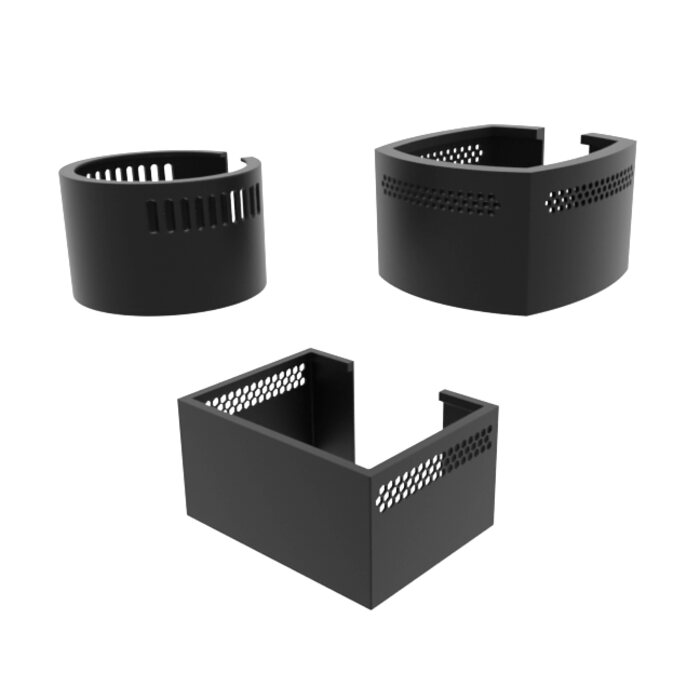
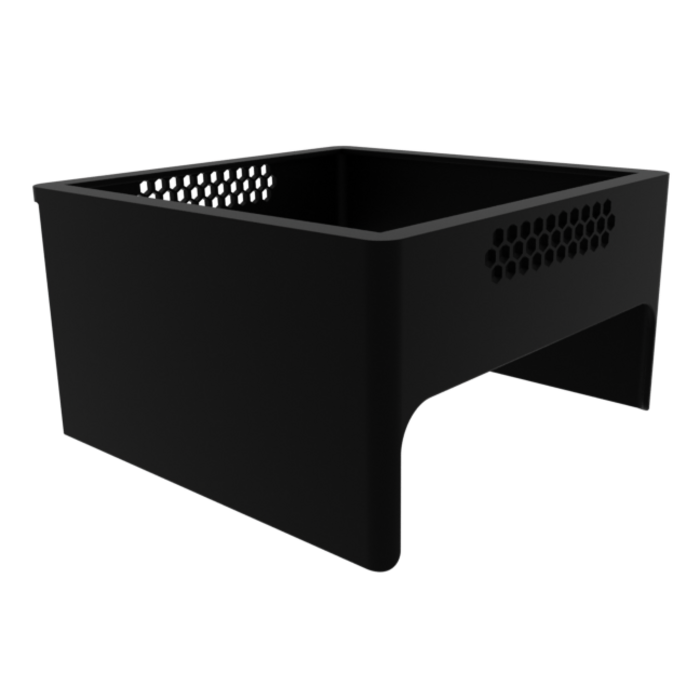
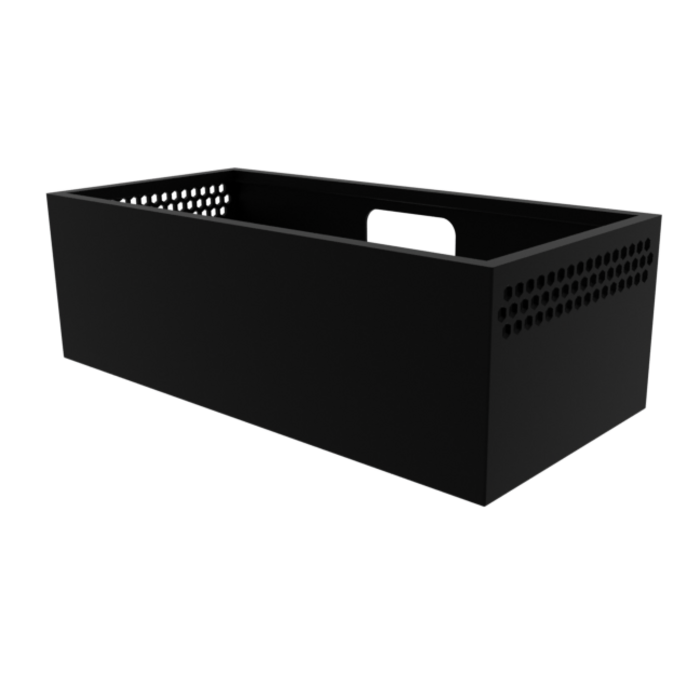
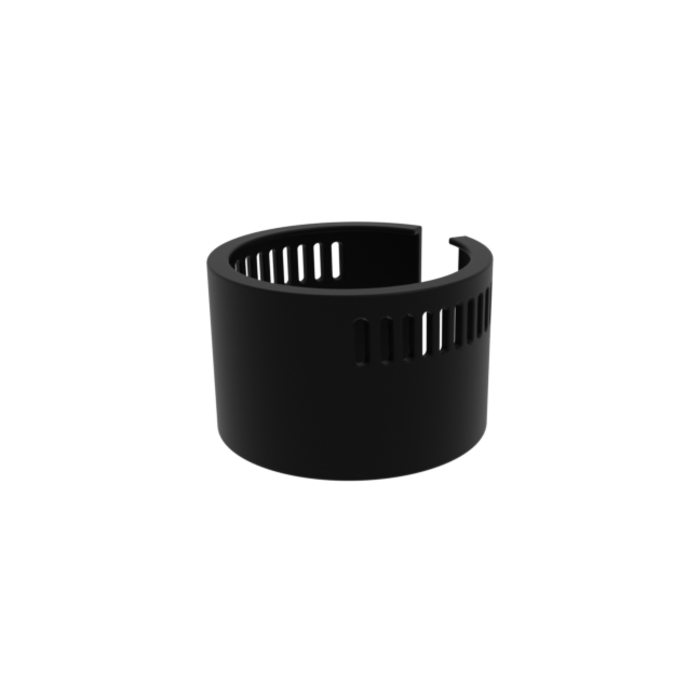
It started with a single problem: aquarium lights throw glare, and the splash off an open sump finds its way into anything electronic hanging above the tank. The honeycomb-vented shade was the fix — a printed shell shaped to a specific fixture, open enough to vent heat, closed enough to block spray.
One shade turned into shades for nearly every popular fixture on the market — AI, Ecotech Radion, Kessil, Red Sea, Neptune, Fluval — each one modeled to its own mounting hardware. Around the light shades grew a second catalog: controller mounts, dosing line clips, frag racks, intake guards. Some designs got sold as printed parts. Some got sold as the file itself, digital-download only, no shipping.
Early days
First shades, one fixture at a time
The earliest surviving renders and prototype photos in the archive date to 2019 — a shade for the AI Hydra 26, modeled straight off the fixture itself.
Growth
A storefront, then a wholesale push
The catalog moved onto Shopify, with digital downloads sold alongside printed parts. A wholesale application went out to Marine Depot, and at one point a manufacturing & distribution licensing agreement was drawn up to explore producing parts beyond one printer farm.
Scaling the farm
More printers, more throughput
The G-code archive is prefixed by printer — different machines picking up different parts of the catalog as order volume grew. A shredder hopper was designed to reclaim scrap and failed prints back into usable material.
Where it stands
The storefront is closed
Eel River Coral is no longer an active storefront. The designs aren't going away, though — they're headed to file-sharing sites so anyone with a printer can still build their own.
The Catalog
What got designed
Four families of parts, grouped the way they were actually built: shade first, then whatever the tank needed next. Compatibility names are the fixtures these parts were designed to fit — no affiliation with Ecotech, Aquaillumination, Kessil, Red Sea, Neptune Systems, or Fluval is implied.
Light Shades
Flagship line · ~12 fixture-specific molds
"The honeycomb ventilation pattern is difficult to print but can be reliably produced on a well-adjusted printer." Every shade in this line shares that same bet: enough open lattice to vent heat and let light through where it should, enough closed shell to keep salt spray off the electronics above the tank.
- AI Prime
- AI Hydra 26/32 HD
- AI Hydra 64 HD
- Radion XR15
- Radion XR15 Peninsula
- Radion XR30
- Kessil A360X
- Kessil H160
- Kessil H80 / A80
- Red Sea ReefLED 50
- Red Sea ReefLED 90
- Red Sea ReefLED 160S
- Neptune Sky
- Fluval Marine Nano
- Aquaknight V2
Radion XR15 Shade
Best seller
Open-back, wall-mount, and peninsula variants for the XR15. The single most-ordered design in the catalog.
AI Prime Shade
Digital & printed
Sold both ways from early on — as a finished printed part, and as a download for anyone with their own printer.
Controller & Equipment Mounts
6 designs
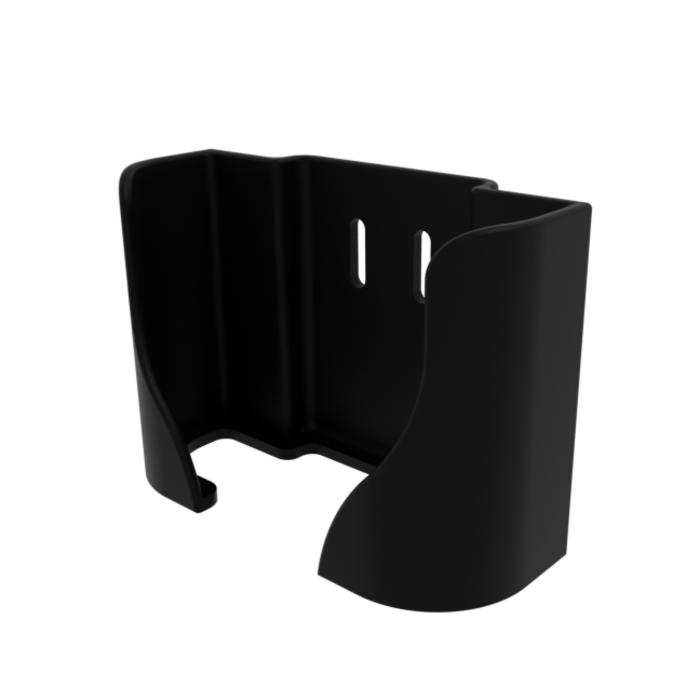
The unglamorous half of the catalog: brackets and holsters that keep pump controllers, wave controllers, and power bricks off the stand floor and out of the drip zone.
- Ecotech Vectra Controller
- Ecotech Vortech MP10w
- Power Supply / Power Brick Stack
- Tunze Osmolator ATO
- Tunze 7092 Wavecontroller
- Tunze 7095 Multicontroller
- Neptune Systems Module
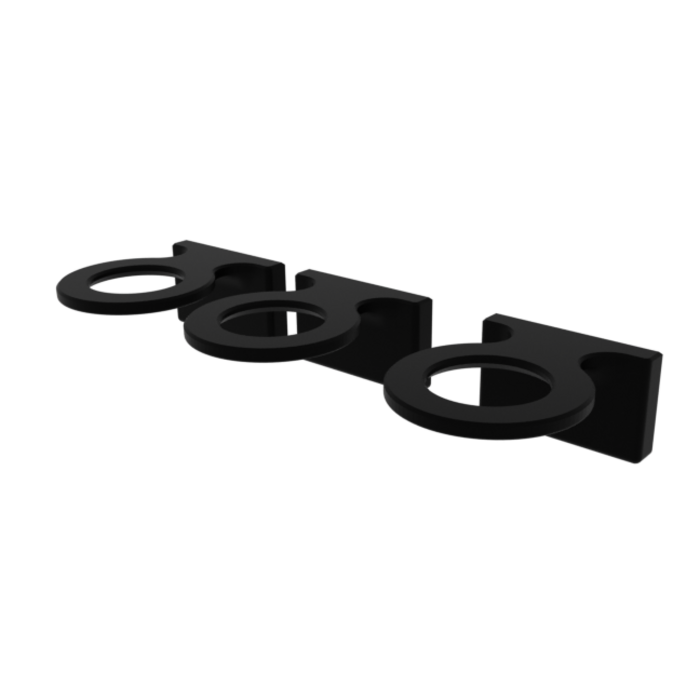
Vectra Controller Mount
2 revisions
A snap-fit bracket for Ecotech's Vectra pump controller — keeps it off the cabinet floor and clear of drips.
Power Brick Stacking Mount
Modular
Stacks power supplies vertically instead of side by side — built after one too many tangled brick pile under a stand.
Plumbing & Dosing
5 designs
Small clips and fittings that turn a loose bundle of dosing tubing and PVC into something that stays where it's put.
- Clip-On Dosing Line Holder (3-pack)
- PVC Pipe Holder
- 90° Elbow Overflow
- Reducing Hose Barb
- Parametric Surface Skimmer
Dosing Line Holder
3-pack
Clips 1/8" dosing line to the inside of a stand or sump wall. Sized to the line, not the tank.
Husbandry & Frag Care
5 designs
The parts that live inside the tank rather than around it — filtration, intake protection, and coral frag handling. This is also where the version history runs deepest.
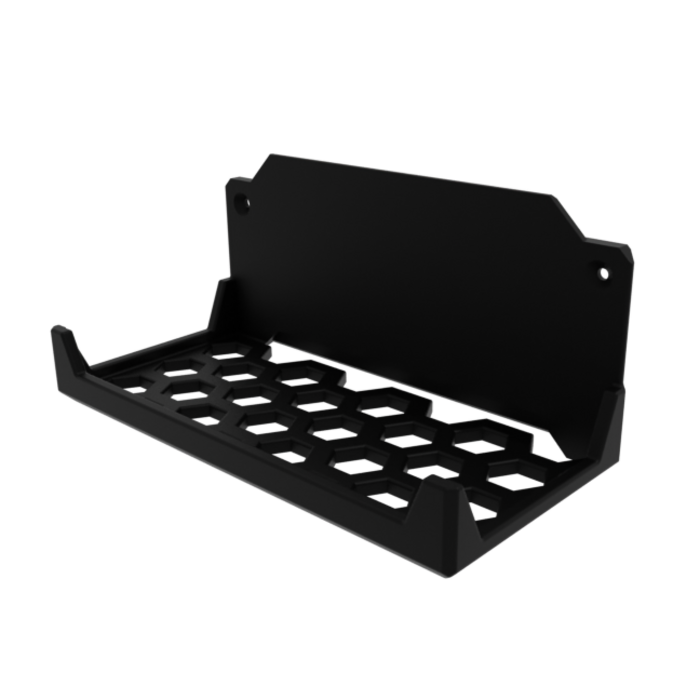
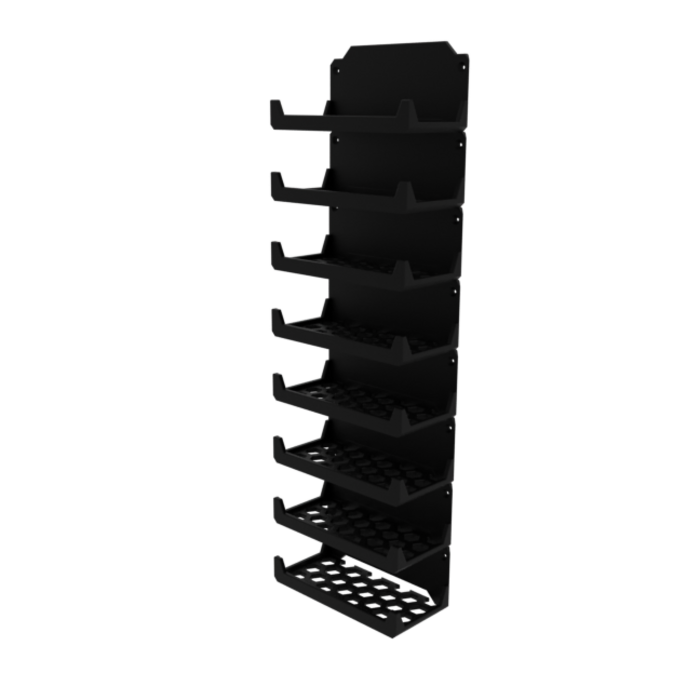
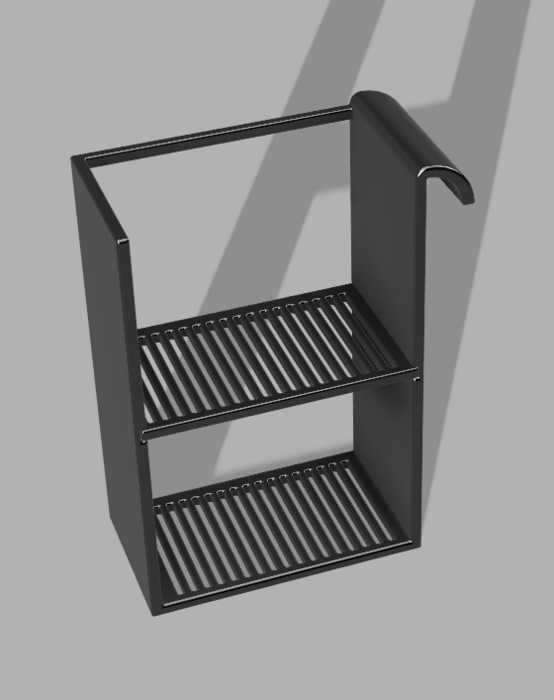
- Honeycomb Frag Rack
- Gluable Frag Plug Holder
- JBJ Nano 24 Filter Box + Divider
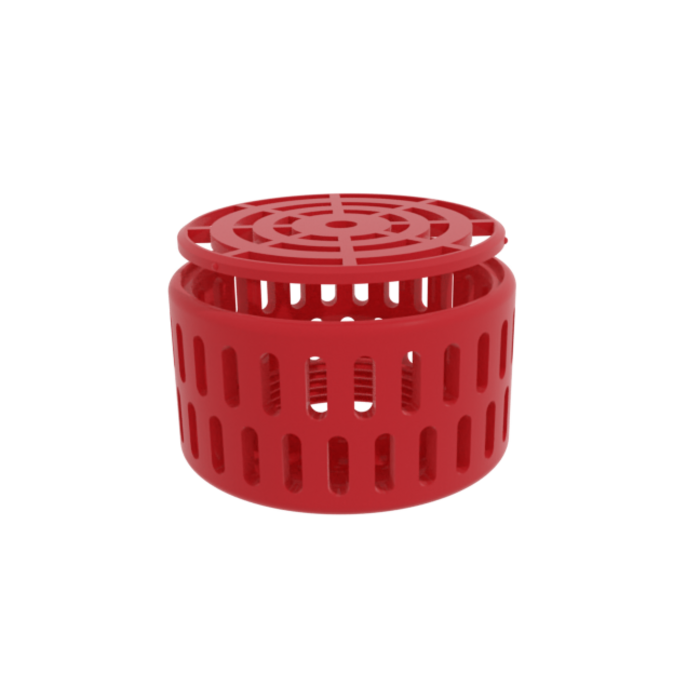
- Varios 6 Intake Guard
- Shipping Buddy (frag transit insert)
Honeycomb Frag Rack
Rev. 33
The single longest-running design on file — leg geometry alone has 30-plus saved revisions, chasing print reliability one draft angle at a time.
JBJ Nano 24 Filter Box
v2 → v8
Wall thickness moved from 4mm to 5mm across its revisions after early prints came out too fragile to install one-handed.
Varios 6 Intake Guard
v2 → v18
An insert-and-shell guard that kept getting refit as more tail widths and flow rates turned up in the wild.
Gluable Frag Plug Holder
v2
A rack that takes a bead of glue instead of a friction fit, so plugs don't walk loose in shipping.
Also on the bench
- No-Bubbles top cover (Ecotech MP pumps)
- Auto top-off controller enclosure
- Grub screw strainer
- Plastic-scrap shredder hopper
Shelved concepts
Not everything shipped. A Reefi Duo Extreme mount and a mangrove-planter mount exist as single saved files with no revision history — ideas that didn't get past the first print.

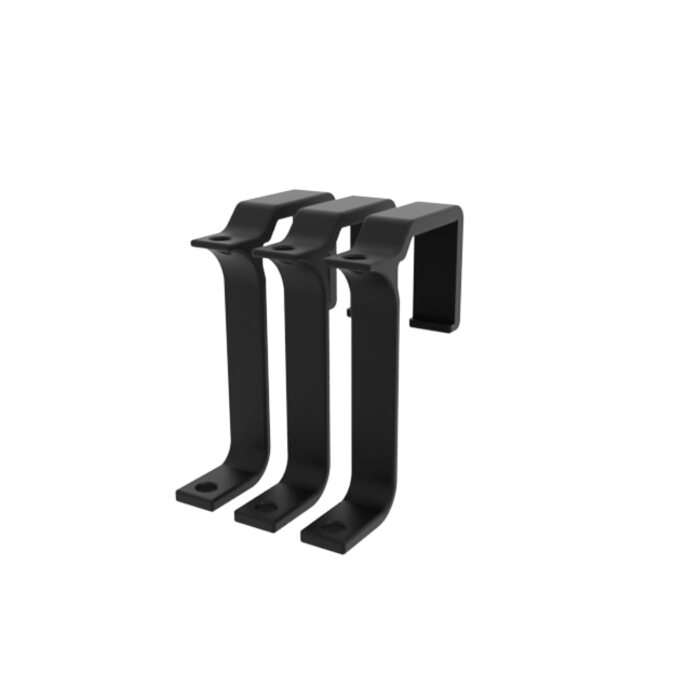
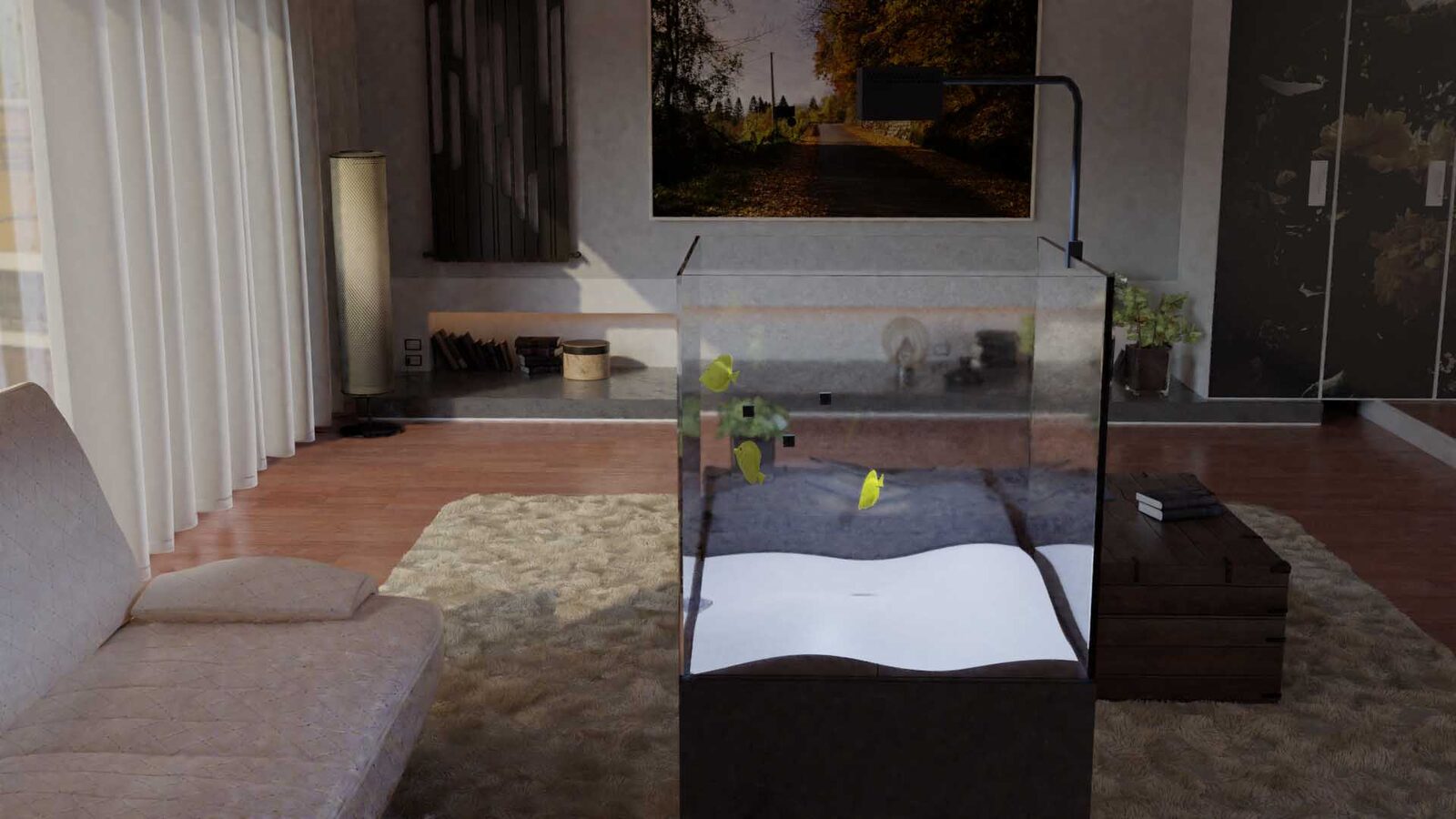 Product render · arm-mounted shade